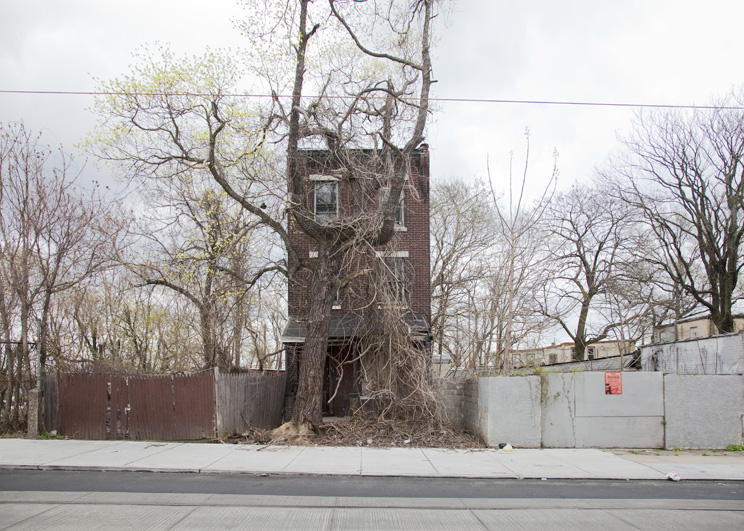
Ben Marcin’s Last House Standing is a photography series that lingers long after the image has been taken in. Created in 2013, the work documents a phenomenon that feels both specific and strangely universal: solitary houses left behind as suburban landscapes are cleared, redeveloped, or erased entirely. These structures remain upright while everything around them disappears, turning the familiar symbol of home into something quietly unsettling.
At first glance, the photographs feel minimal. A single house sits in the center of the frame, surrounded by open dirt, construction scars, or an absence so complete it becomes the dominant presence. There are no dramatic gestures or visual tricks. Marcin allows the scene to speak plainly, which is precisely what gives the images their emotional charge. The restraint forces the viewer to confront what is missing as much as what remains.
The power of Last House Standing lies in its psychological weight. These houses are not romanticized ruins, nor are they celebrated survivors. They feel paused in time, stripped of context and purpose. Without neighboring homes, streets, or signs of daily life, the buildings become isolated objects rather than lived-in spaces. The idea of home, typically associated with warmth and stability, is reframed as something fragile and temporary.
Marcin’s compositions emphasize this dislocation. The houses are often centered, almost formally presented, yet the surrounding emptiness undermines any sense of comfort. The viewer is left to imagine what once existed there. Families. Routines. Noise. Memory. The photographs do not provide answers, only evidence of transition.
There is an unmistakable commentary on development and displacement running through the series, though it is never spelled out. The images reflect how quickly landscapes can change, and how easily personal history can be erased in the process. These houses stand not as monuments, but as remnants caught between past and future, belonging fully to neither.
What makes the series resonate is its emotional neutrality. Marcin does not instruct the viewer on how to feel. The work avoids nostalgia and avoids outrage. Instead, it creates space for reflection. The images are calm, but not comforting. Quiet, but not empty.
In a culture that often celebrates progress without pause, Last House Standing slows the conversation down. It asks what is lost when places are cleared and stories are displaced. The houses remain, but their meaning shifts. They become symbols of impermanence, resilience, and the uneasy relationship between people and the spaces they build.
Last House Standing endures because it captures a moment that feels increasingly common and deeply human. The familiar made strange. The ordinary rendered haunting. A reminder that even the most solid structures are temporary.
Credit:
Artist: Ben Marcin
Series: Last House Standing
Year: 2013